
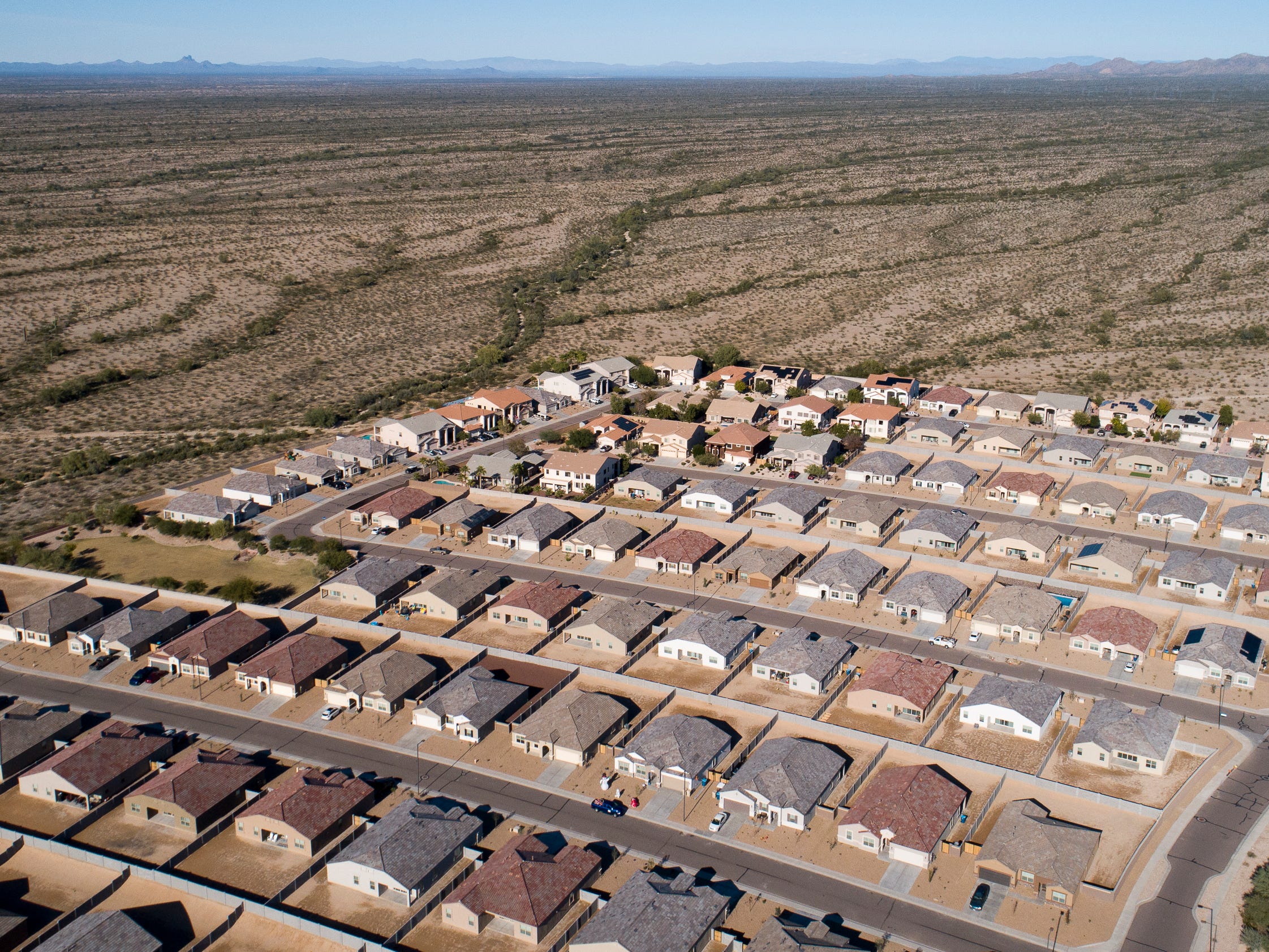
Housing is the “make-or-break” issue for whether young people can build a life here, and whether Arizona can keep the talent it develops.
Arizona’s challenge is not mysterious: demand has grown faster than supply, and the combination of higher prices and higher rates has pushed homeownership farther out of reach for first-time buyers while intensifying pressure on rents.
The goal is not a market crash, it’s a healthier market: more supply, faster delivery, more attainable ownership pathways, and fewer families pushed into homelessness.
1) What the data says in Arizona right now
Home prices moved far faster than incomes. ARCHES reports Arizona’s typical home value reached $428,156 in 2024 — about $160,000 higher than 2019. [1]
Rates amplified the problem. ARCHES notes the national average mortgage rate rose from 2.67% (2020) to 6.85% (2024), increasing monthly payments and discouraging existing owners from listing. [1]
Rental pressure is now severe. In 2024, 54% of Arizona renters were cost-burdened (paying 30%+ of income on rent), and there were only 37 affordable-and-available homes per 100 renter households at or below 50% of AMI. [1]
Evictions are a leading indicator of instability. ARCHES reports 106,587 eviction court filings in Arizona in 2024, the highest on record. [1]
Homelessness is at an all-time high. ARCHES reports 14,737 people experiencing homelessness in Arizona in 2024; families with children increased 15% from 2023 to 2024 and represent 21% of all people experiencing homelessness. [1]
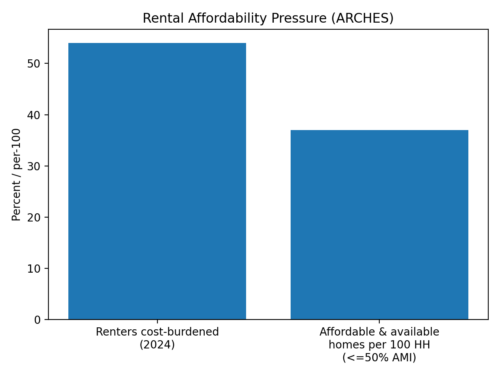
Figure 1. Rental affordability pressure indicators. [1]
2) The supply problem is real and solvable
Arizona’s affordability problem is ultimately a supply-and-timeline problem.
Common Sense Institute estimates Arizona had an immediate housing shortfall of roughly 56,047 units in early 2025 and a cumulative deficit of about 121,334 units. [2]
ARCHES reports that annual home construction reached a modern record in 2023 (52,920 homes added), but demand still outpaced housing growth. [1]
The lesson is straightforward: the state can build, but it needs to build faster, more predictably, and with a broader mix of housing types including “middle housing” like duplexes, triplexes, townhomes, and small multifamily where it fits.
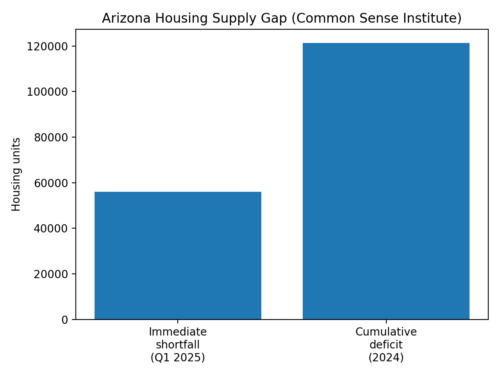
Figure 2. Arizona housing supply gap estimates. [2]
3) Speed matters: shortening timelines and reducing red tape
The cost of housing is not just the cost of materials and labor. It’s also the cost of time.
When permitting and entitlement timelines stretch, projects become riskier and more expensive. As a result, fewer units get built. Speeding up approvals (without lowering standards) is one of the most direct ways to increase supply.
Other states have used “shot clocks” and streamlined approvals to reduce procedural delays for compliant projects. California’s streamlining reforms (S.B. 35 and extensions) are one example of reducing procedural hurdles to speed approvals for qualifying developments. [3]
A practical Arizona approach is to set predictable timelines, standardize application requirements, and limit duplicative reviews so builders can deliver units faster and cities can plan infrastructure with confidence.
4) Middle housing and first-time buyer access
Arizona needs more attainable entry points, not just luxury units and not only large apartment projects.
“Middle housing” creates ownership and rental options between single-family homes and large multifamily towers: duplexes, triplexes, fourplexes, cottage courts, townhomes, and small multifamily.
Oregon’s HB 2001 is a notable example of legalizing middle housing types more broadly in areas that were previously limited to detached single-family homes. [4][5]
Minneapolis’ land-use reforms offer another data point: the city added supply meaningfully and saw comparatively low rent growth over a multi-year period. [6]
For first-time buyers, access is not just price, it’s the ability to compete. Down payment assistance, shared-equity models, and targeted mortgage support can expand access without distorting the market when paired with increased supply.
5) Investors, out-of-state buyers, and protecting market access
Voters are right to be concerned about competition from investors and out-of-state buyers. This is especially important when starter homes become rental inventory.
ARCHES estimates that 11% of homes purchased in Arizona in 2023 had out-of-state buyers (down from a 16% peak in 2021). [1]
ARCHES also notes that roughly one in six residential transactions are made by investors, and that investor purchases rose sharply during the pandemic period before falling back toward pre-pandemic levels in 2023. [1]
The point isn’t to demonize investment. Arizona needs capital. But the rules should protect pathways to ownership for residents, and especially first-time buyers and middle-income households.
Other states and cities are experimenting with strategies such as transparency requirements, targeted acquisition limits for specific categories of housing, and support for community land trusts and shared-equity ownership. These approaches may be effective in Arizona but must be evaluated carefully to avoid unintended consequences.
6) Preventing homelessness: the most cost-effective strategy is earlier intervention
When families fall into homelessness, the human cost is enormous and the cost to our community rises quickly.
With eviction filings at record levels, prevention has to start upstream: rapid assistance for households facing temporary shocks, stronger mediation and legal support, and faster placement into stable housing when people do lose housing.
ARCHES’ eviction and homelessness trends reinforce why prevention matters: evictions are up, and homelessness is at an all-time high. [1]
Best-practice approaches generally combine eviction prevention (including legal aid and emergency assistance), supportive housing for the chronically homeless, and coordinated entry systems to match people to the right level of support.
Side note on the homeless population:
There is a common perception that homelessness is primarily driven by mental illness and substance use. Those challenges are real and visible, especially among individuals experiencing chronic homelessness.
But they are only part of the picture.
Data and on-the-ground experience from service providers show that homelessness in Arizona includes several different populations, each with different causes and needs. [1]
These include:
- Individuals experiencing chronic homelessness, often with behavioral health challenges
- Families with children who have lost housing due to economic pressures
- Seniors on fixed incomes who can no longer keep up with rising costs
- Individuals facing temporary hardship due to job loss, medical expenses, or other disruptions
ARCHES reports that families with children now represent a growing share of the homeless population in Arizona, and that overall homelessness has reached record levels. [1]
This matters because solutions need to match the situation.
A one-size-fits-all approach does not work:
- Behavioral health services are critical for some individuals
- Short-term financial assistance or housing stabilization can prevent others from falling into long-term homelessness
- Seniors may need different forms of support than working families or younger individuals
Addressing homelessness effectively requires recognizing these differences and responding accordingly.
Reducing stigma is part of that work.
When the issue is oversimplified, it becomes harder to build support for solutions that actually work. When it is understood more clearly, it becomes easier to focus resources where they can have the greatest impact.
7) Price stabilization without a crash
Arizona does not need a market crash that wipes out existing homeowners’ equity and destabilizes neighborhoods.
A better path is steady, responsible price stabilization: increase supply over time, reduce timeline-driven costs, and expand entry points so that demand can be met without bidding wars.
Eller’s Arizona Economic Outlook notes affordability remains impaired compared to pre-pandemic levels, even where measures have improved modestly. [7]
That’s why supply-side policy must be paired with targeted tools for first-time buyers and homelessness prevention.
Summary
Arizona’s housing challenges didn’t happen overnight, and they won’t be solved by any single policy.
But the path forward is clear: increase supply, reduce barriers, expand access, and focus on outcomes that allow people to build stable lives here.
The goal isn’t to disrupt the market. It’s to make it work again so that young people can get started, families can stay rooted, and Arizona remains a place where opportunity is real and within reach.
Sources
[1] ARCHES (Morrison Institute/ASU & partners), “ARCHES – 2025 State of Housing in Arizona Report.” Key findings on home values, mortgage rates, renter cost burden, affordable-and-available units, eviction filings, and homelessness. (Issuu publication).
[2] Common Sense Institute Arizona, “Housing Affordability in Arizona: Q1 2025 Update.” Supply gap estimates.
[3] The Pew Charitable Trusts, “Reforms Spur Faster Housing Approvals in California” (Aug. 28, 2024) — summary of streamlining/shot-clock style reforms.
[4] Oregon Legislature, House Bill 2001 (enrolled) — middle housing requirements.
[5] Oregon Department of Land Conservation and Development, HB 2001 Interpretation and Implementation FAQ.
[6] The Pew Charitable Trusts, “Minneapolis Land Use Reforms Offer a Blueprint for Housing Affordability” (Jan. 4, 2024) — housing stock and rent trends.
[7] University of Arizona Eller College, Arizona Economic Outlook (Dec. 12, 2025) — affordability indicators (Atlanta Fed Home Ownership Affordability Monitor).