

Arizona is growing, that part is easy to see. New development, new investment, and steady population growth all point to a state that continues to attract people and capital.
But when you look beneath the surface, a different picture emerges, especially for young people trying to build a life here.
More and more, I’m hearing the same thing from young adults, parents, and employers: people are doing what they’re supposed to do, and it’s still not working.
A growing gap between effort and outcome
Young people are getting educated, entering the workforce, and trying to build a future in Arizona. At the same time, employers are struggling to find talent, and families are feeling increasing pressure from rising costs.
These issues are connected, and they are showing up in three key areas: housing, healthcare, and the connection between education and opportunity.
1) Housing: the starting point that keeps moving
Housing has become one of the biggest barriers to getting started. Even as the market has cooled from its peak, affordability remains significantly worse than it was before the pandemic. [3]
The ARCHES 2025 State of Housing report illustrates why: Arizona’s typical home value reached about $428,156 in 2024, roughly $160,000 higher than in 2019. [1]
At the same time, higher interest rates have turned prices into monthly payments that many first‑time buyers simply can’t carry. ARCHES notes the national average mortgage rate rose from 2.67% (2020) to 6.85% (2024). [1]
Supply is a core constraint. Common Sense Institute estimates an immediate statewide housing shortage of 56,047 units (Q1 2025) and a cumulative deficit of 121,334 units (as of 2024). [2][7]
For many young people, this means homeownership is delayed or feels out of reach. And it’s not just buying: renters face the same pressure when supply doesn’t keep up with demand.
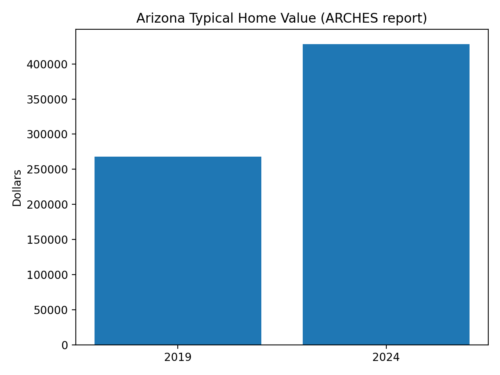
Figure 1. Arizona typical home value (ARCHES). [1]
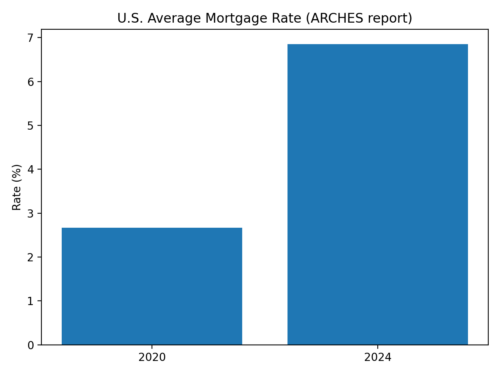
Figure 2. U.S. average mortgage rate (ARCHES). [1]
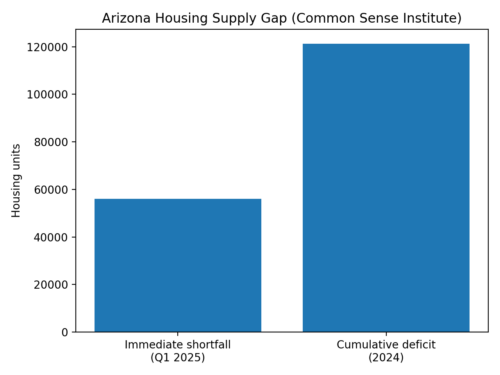
Figure 3. Estimated Arizona housing supply gap (Common Sense Institute). [2][7]
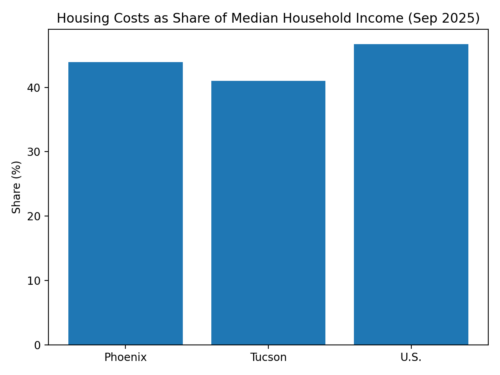
Figure 4. Housing costs as share of median household income (Eller Economic Outlook, Sep 2025). [3]
2) Healthcare: a growing share of jobs and household budgets
Healthcare is one of the fastest‑growing parts of Arizona’s economy, and it has become the dominant driver of job growth in the most recent year. ABC15 reported that health care accounted for 61% of all new positions created in Arizona in 2025. [4]
This is a signal about concentration. When job growth is uneven, young people feel it first because they’re trying to enter the workforce and establish financial footing.
Healthcare is also a real cost pressure. The state’s uninsured challenges show up in public data: America’s Health Rankings notes that the uninsured rate is higher among adults ages 26–34 than other age groups. [5] For many young adults, coverage is inconsistent or unaffordable. That instability compounds the stress of housing and career uncertainty.
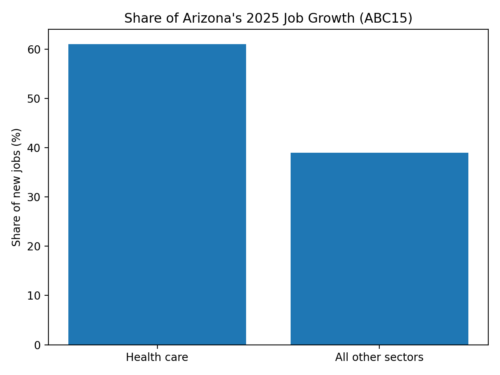
Figure 5. Share of Arizona’s 2025 job growth attributable to healthcare (ABC15). [4]
3) The workforce gap: education and opportunity out of sync
Arizona’s economy continues to evolve, but the pathway into stable, upwardly mobile careers is becoming less clear.
Eller’s Arizona Economic Outlook notes uneven conditions across the economy and highlights that housing affordability remains impaired compared with pre‑pandemic levels. This is an important constraint on labor mobility and household stability. [3]
At the same time, employers report difficulty finding workers with the right skills, while many young people report difficulty finding opportunities that match what they trained for.
Technology change is part of this story. The Bureau of Labor Statistics expects software developer employment to grow over the long run, but it also notes that AI will reshape how computer occupations work. [6] Indeed’s Hiring Lab has reported that AI is showing up directly in job postings, especially in software development and data roles. [8] The practical reality for many early‑career candidates is that expectations are shifting toward higher‑level skills sooner.
What this means for Arizona’s future
When you step back, the pattern is clear: housing is harder to afford, healthcare is a growing cost burden, and the path from education to stable employment is less certain.
These trends don’t just affect individuals. They shape the future of the state. If young people can’t find opportunity here, they will go somewhere else. Communities lose talent, businesses lose workers, and long‑term growth becomes harder to sustain.
Where we go from here
Addressing these issues requires focused, practical work in a few areas:
- Education — strengthen early literacy and improve alignment between education and workforce needs. We need to re-envision an education system designed for the industrial era, and enable it to meet the needs of a modern workforce.
- Economic development — support small businesses and entrepreneurship that create durable, local opportunity. Economic development should be balanced between large, out-of-state interests, and our local, home-grown companies.
- Housing — increase supply and reduce barriers and regulation that limit development and drive up costs.
These are levers that can move outcomes for the next generation when paired with discipline and follow‑through.
Sources
[1] ARCHES (ASU Morrison Institute / Issuu), “ARCHES – 2025 State of Housing in Arizona report” (see Executive Summary and housing market sections).
[2] Common Sense Institute Arizona, “Housing Affordability in Arizona Q1 2025 Update” (housing shortage estimate).
[3] University of Arizona Eller College of Management, “Arizona Economic Outlook” (Dec 12, 2025; housing affordability metrics).
[4] ABC15 Arizona, “Arizona’s 2025 job growth is slowest in 15 years” (Jan 27, 2026; healthcare share of job gains).
[5] America’s Health Rankings, “Explore Uninsured in Arizona” (age group uninsured rate context).
[6] U.S. Bureau of Labor Statistics, “AI impacts in BLS employment projections” (Mar 11, 2025; AI and computer occupations).
[7] Common Sense Institute Arizona, “Housing Affordability in Arizona Quarter 2 2025 Update” (cumulative deficit figure referenced in Arizona reporting).
[8] Indeed Hiring Lab, “January 2026 US Labor Market Update: Jobs Mentioning AI are Growing…” (Jan 22, 2026).