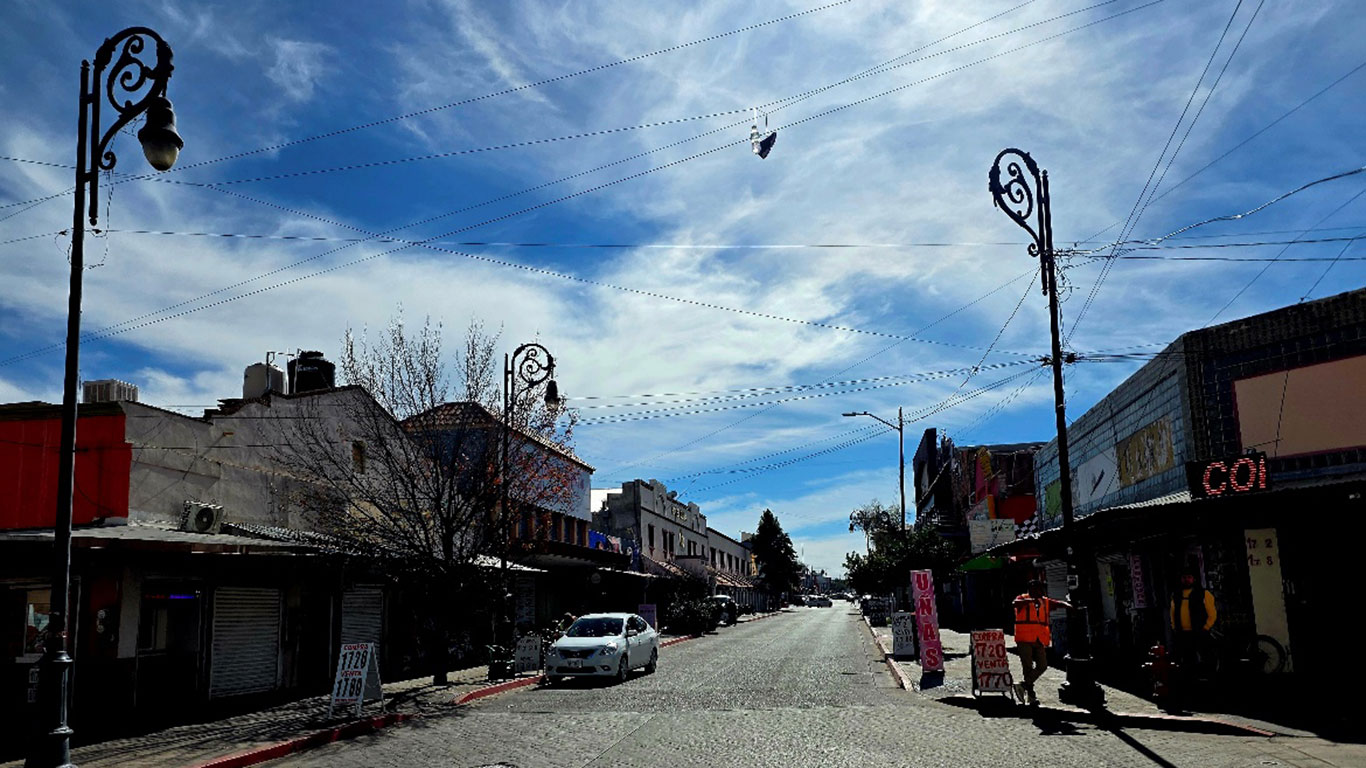
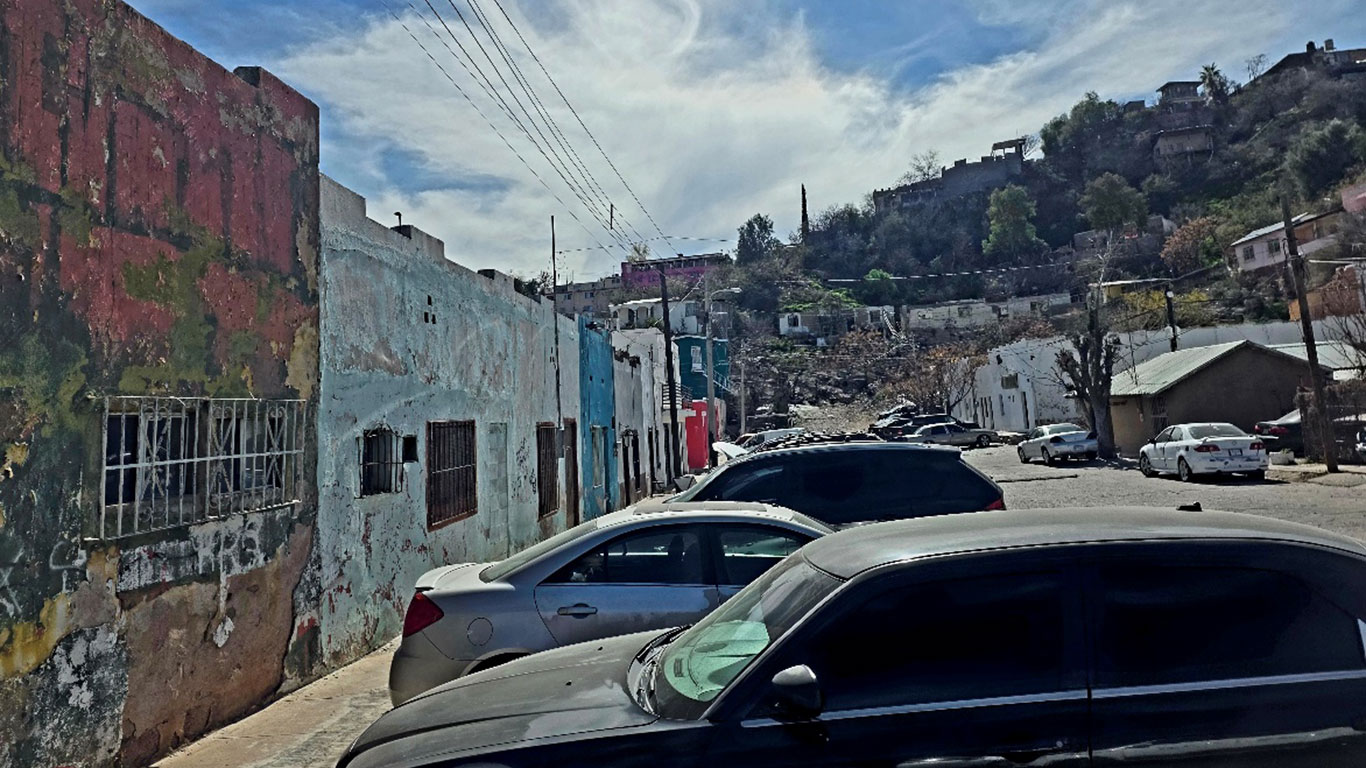
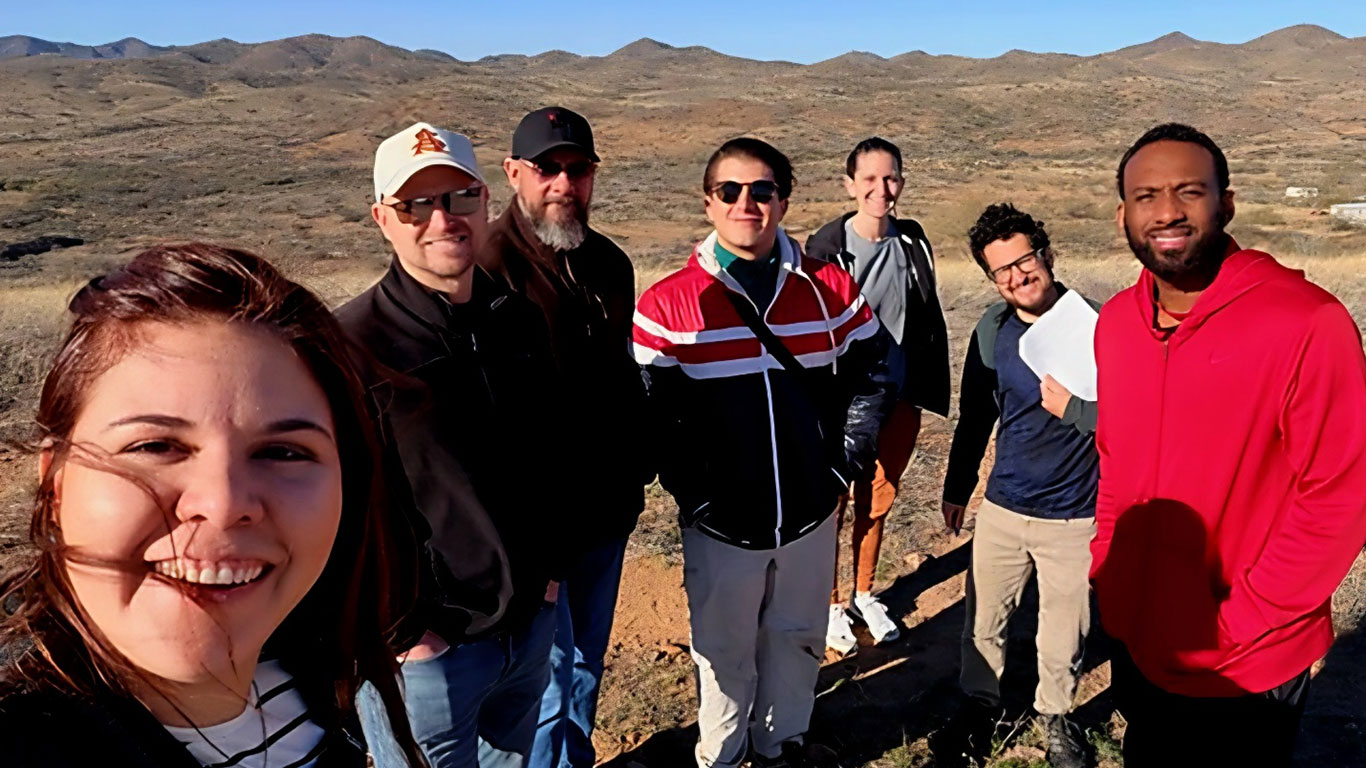
I spent several days along the U.S.–Mexico border near Nogales as part of a collaboration between Kino Border Initiative, Amplify Peace, and my church, Central Christian Church.
The purpose wasn’t political.
It wasn’t to defend a party or argue a position.
It was to listen.
To walk the land.
To hear from people whose lives are shaped by the border every day: migrants, ranchers, faith leaders, and Border Patrol agents alike.
What I found is not a problem that can’t be reduced to easy answers.
Orientation Without Conclusions
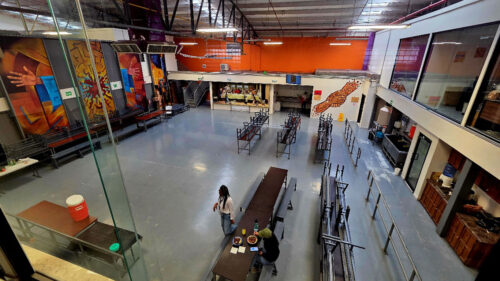
At Kino Border Initiative, we began with listening and orientation.
We learned that many of the people served there have lived in the United States for ten, twenty, sometimes thirty years before being deported. Many worked steadily. Many raised children who are still in the U.S.
We heard how policy changes ripple outward: asylum appointments canceled abruptly, people stranded mid-process; individuals showing up for court dates, being detained, and then missing subsequent hearings they were never able to attend, automatically triggering deportation.
The emphasis wasn’t on fixing people.
It was about humanizing them and accompanying them through uncertainty.
The Land Speaks First, and Last
Then we met the desert.
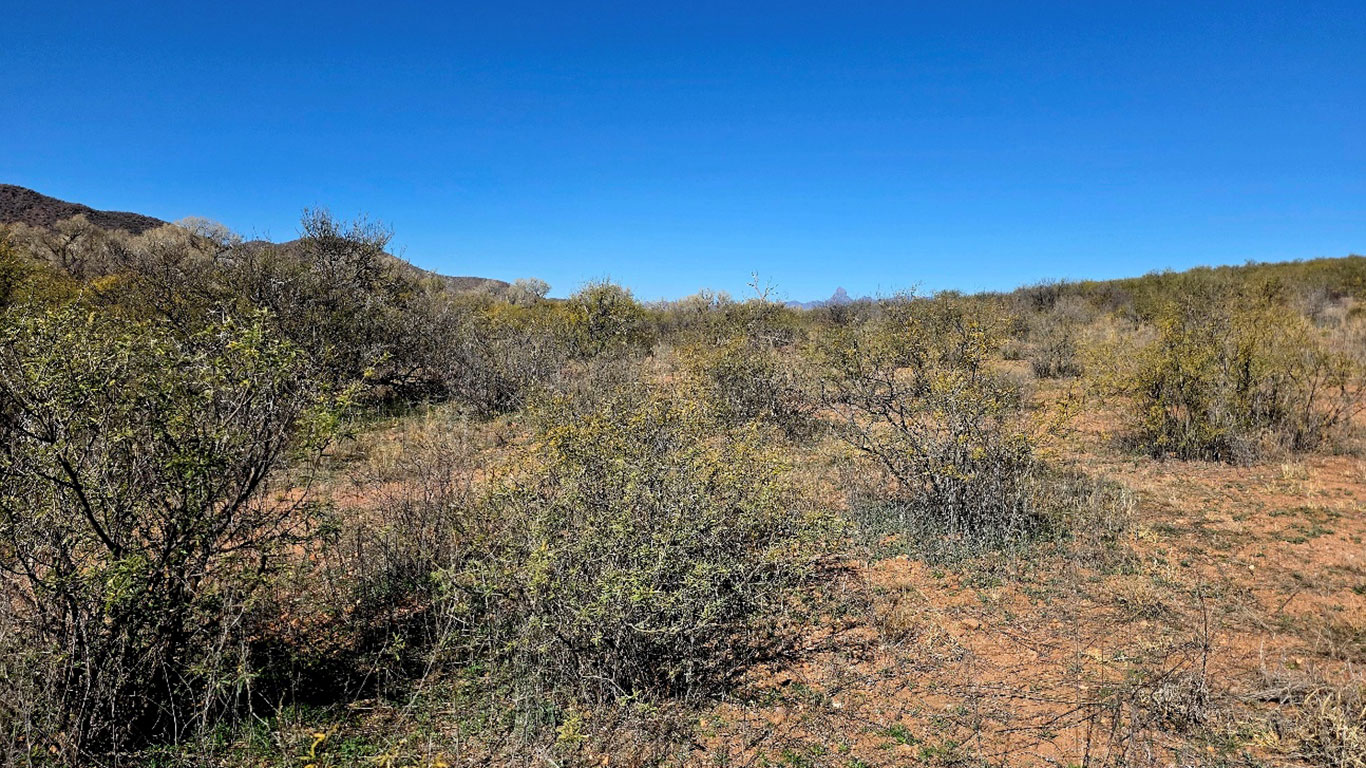
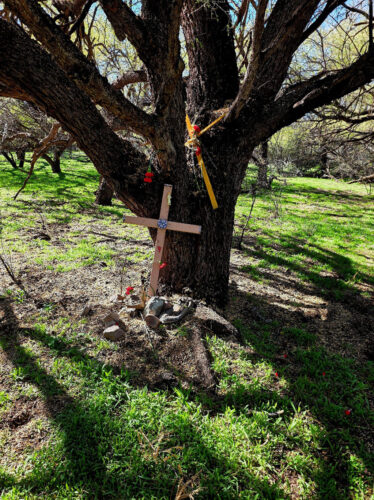
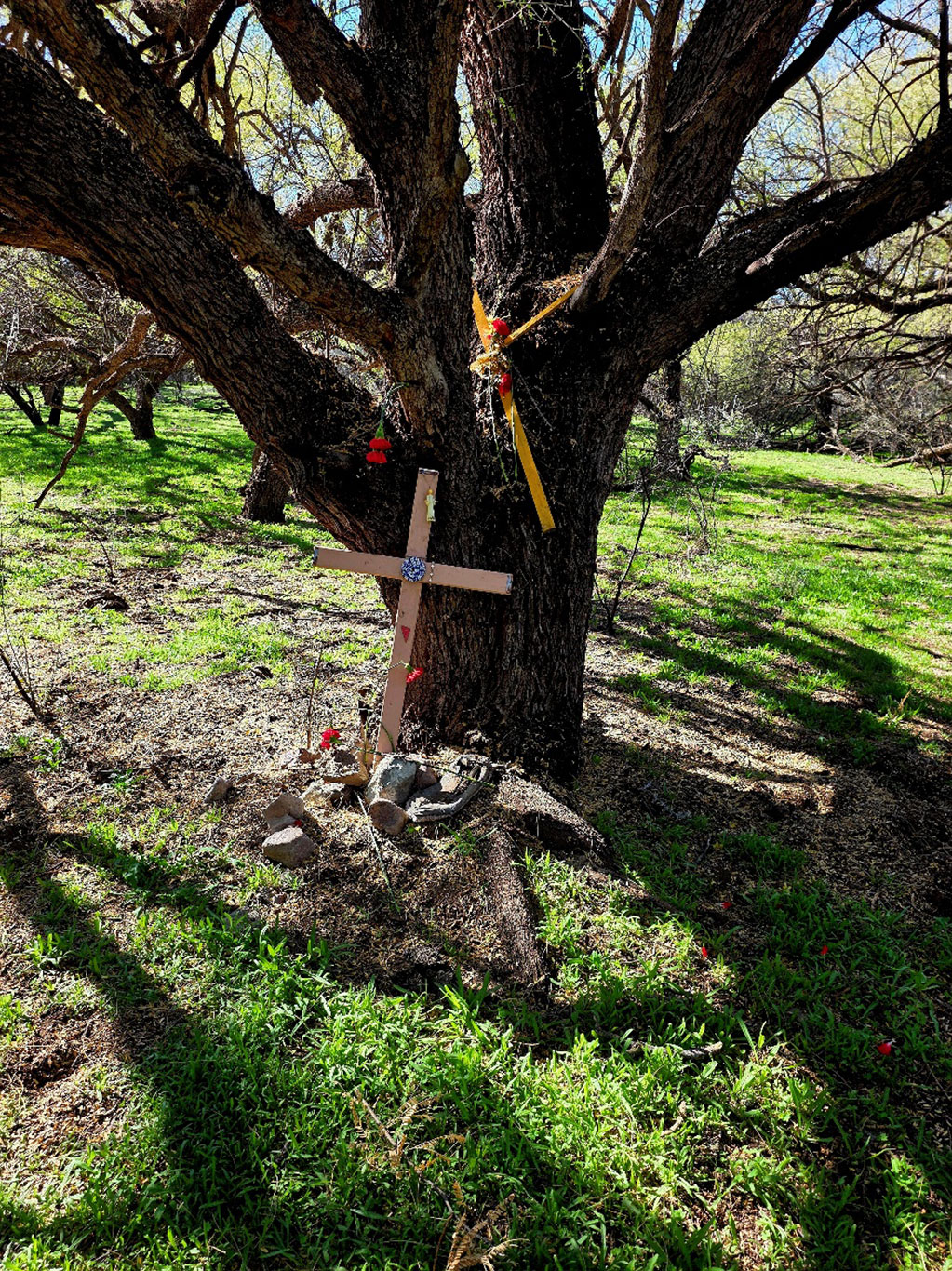
Outside Arivaca, Arizona, the land opens in every direction. The terrain is rough and uneven, thick with thorny brush and cactus. There’s no water. The sun is relentless, even in February.
We were out there for only a few hours, properly equipped, and it was enough to understand how unforgiving this place is. Arms scratched raw. Legs tired. Progress slow. Covering a single mile takes far longer than you expect.
Then you’re told that people cross this land carrying everything they own.
That some carry babies.
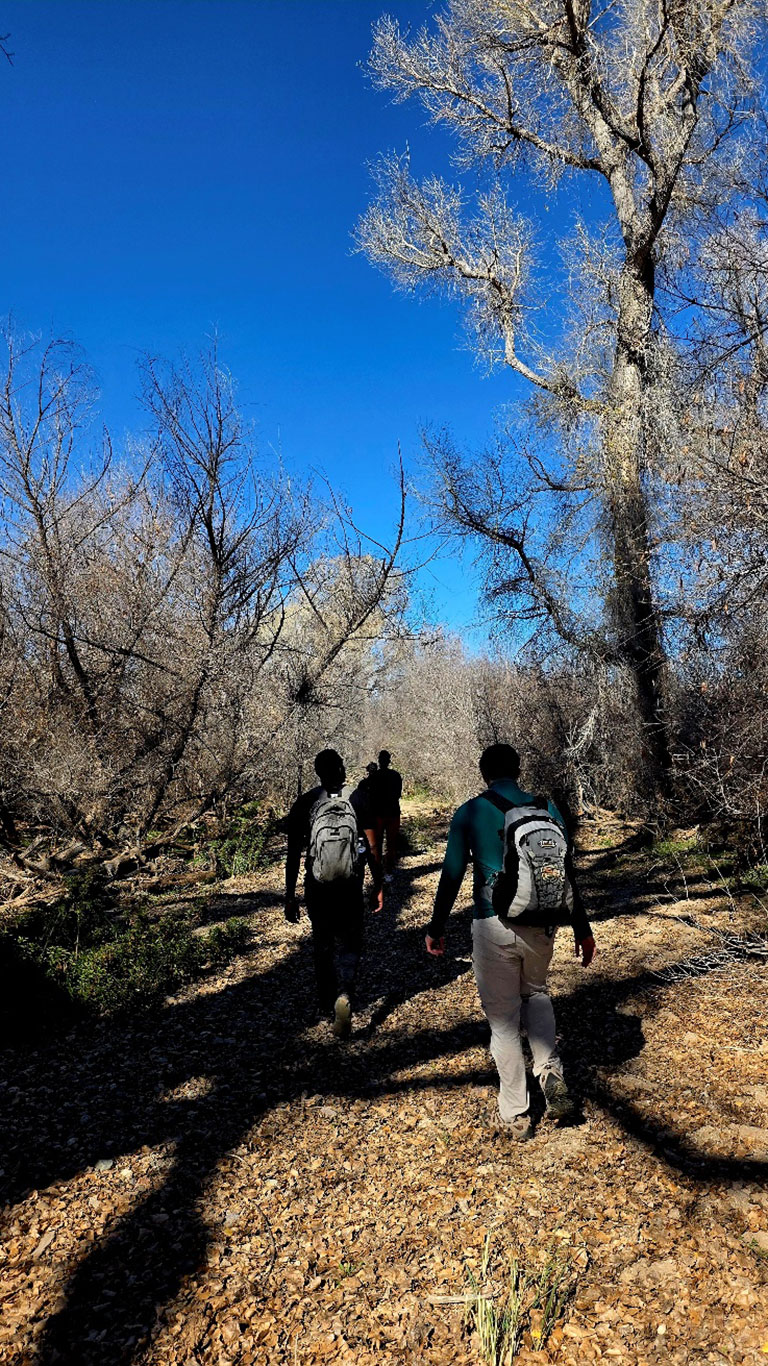 You notice discarded water bottles tangled in brush, many painted black so that they don’t reflect the sun, making the bearer harder to see. Faint footpaths that disappear into open terrain. Dry washes that offer momentary shelter before opening back into heat.
You start to understand how a simple injury out here (a blister, a twisted ankle) can become life-threatening. Migrants don’t arrive at hospitals when they make it through. They disappear quietly, trying to heal however they can, because visibility itself can be dangerous.
That’s when the language we usually use — flows, encounters, numbers — stops making sense.
There’s a quote from Pope Francis that I learned on this trip:
“This crisis which can be measured in numbers and statistics, we want instead to measure with names, stories, and families.”
Borderlands and Ranch Life
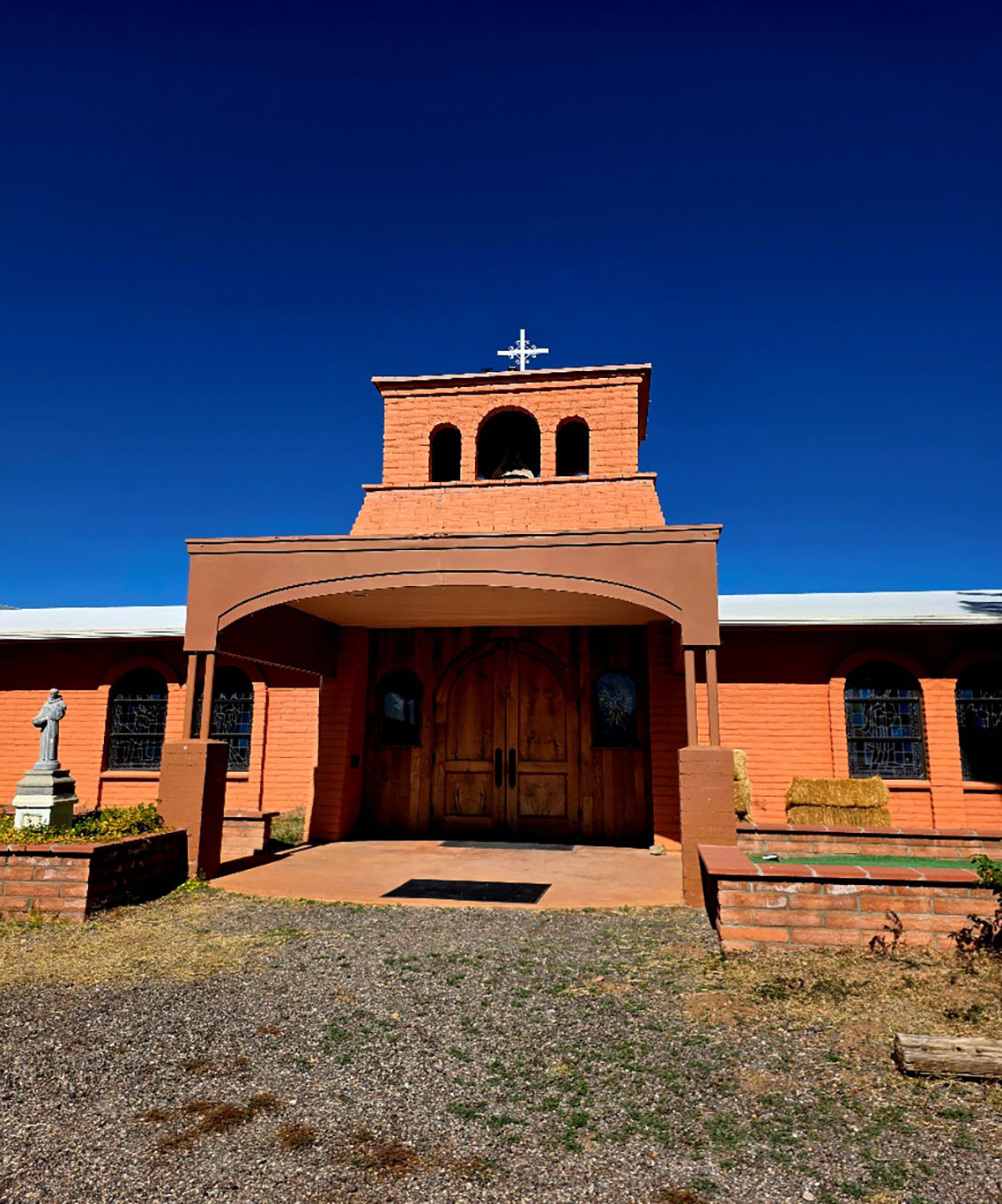 From there, we traveled to the town of Arivaca where ranchers and residents live with realities most Americans never encounter. After Sunday mass, we shared a meal with them.
We spoke with multi-generation ranching families whose land runs directly along the border. Miles of fence, gaps where infrastructure ends, motion-sensor cameras quietly logging movement day and night.
They described thousands of migrants passing through an unfinished gap in the border wall in previous years, and almost none now that the wall is finished and the administration is focused on securing this area. They described organized groups moving in coordinated ways, wearing similar clothing, carrying similar packs, distinct from families and individuals seeking work or safety.
They also described fear: fear of cartel retaliation, and fear of theft and violence. Ranchers have been murdered by the cartel for cooperating with law enforcement.
Some talked about finding bodies on their land, including deaths from exposure and, in many cases, murder. They spoke of the abuses that women face on the journey.
They were clear about wanting a secure border.
They were also clear about being deeply uneasy with enforcement actions far from the border. Actions they believe damage trust in cities and neighborhoods in ways that take decades to repair.
Over and over again, I heard the same word: Complicated.
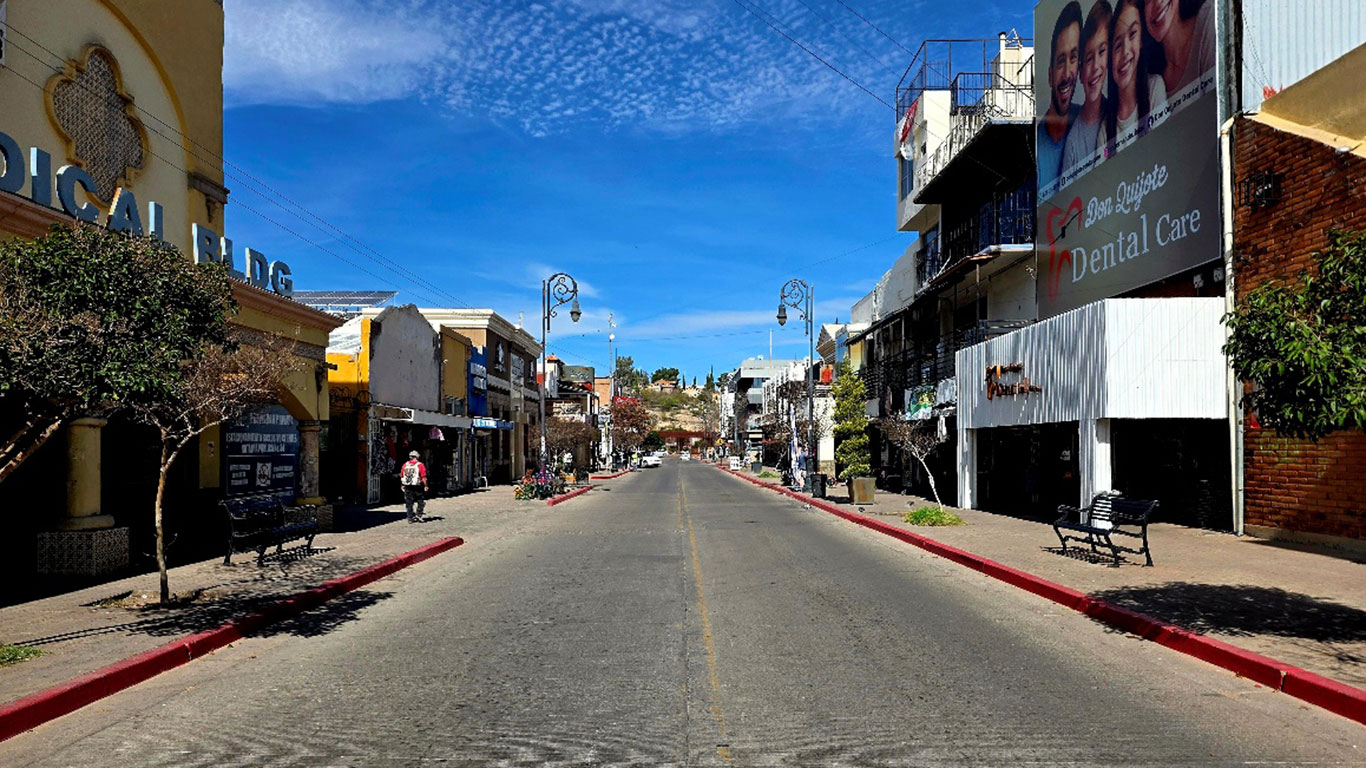
Walking With People in Nogales, Mexico
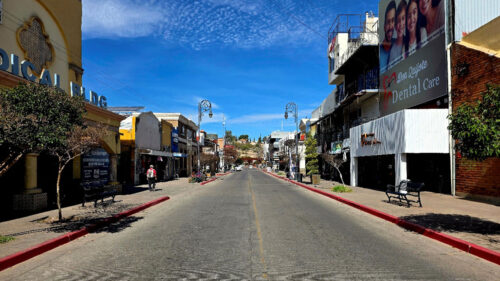
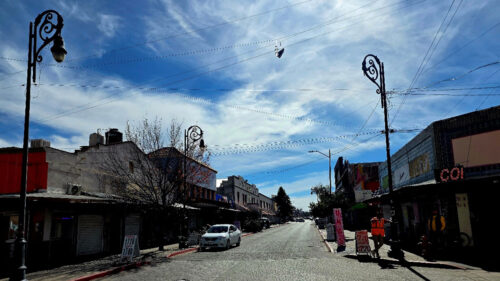
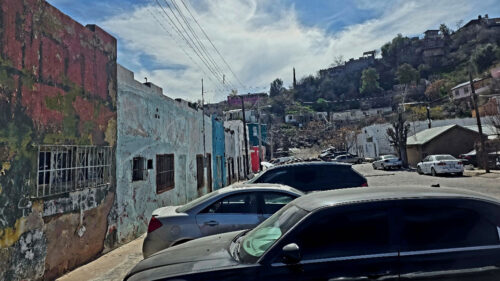
Crossing into Nogales, Mexico, the border wall dominates the landscape.
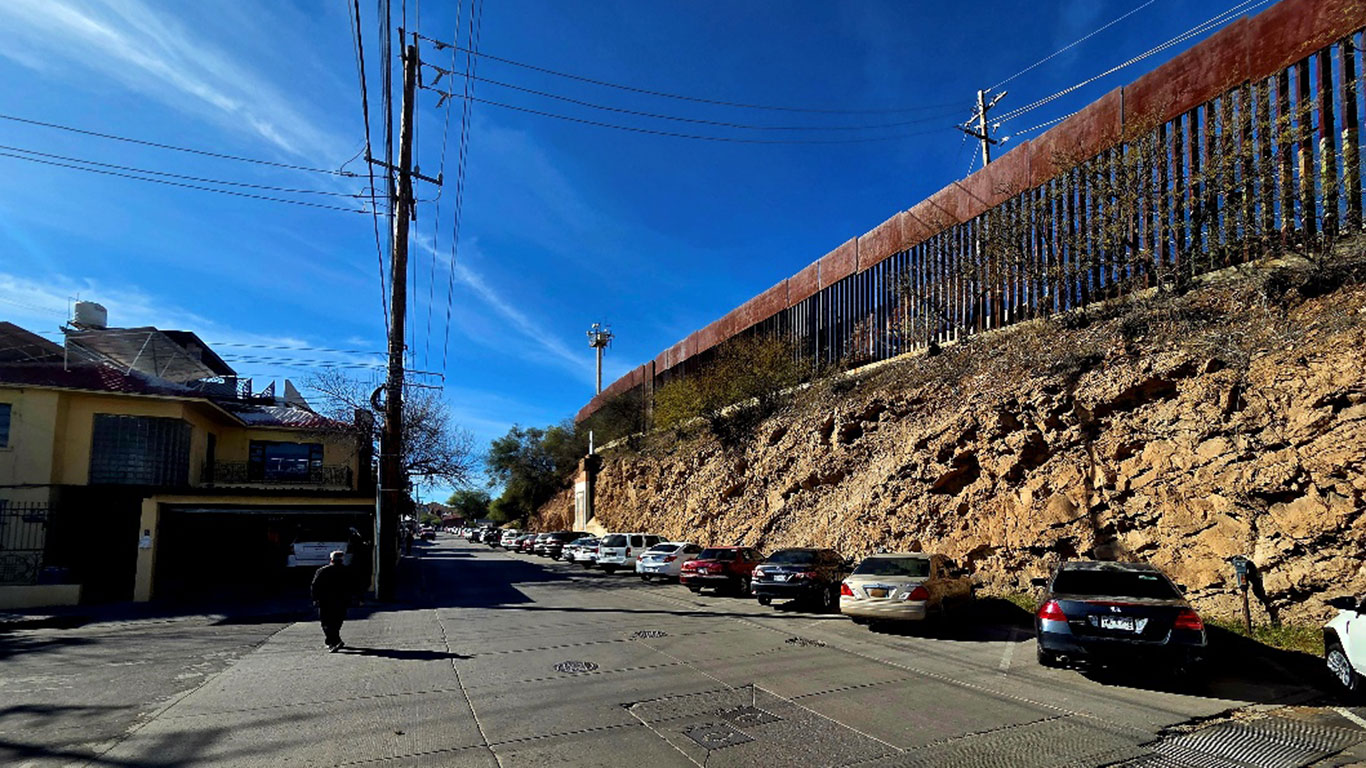
On the U.S. side: razor wire, patrol vehicles, constant surveillance.
On the Mexican side: homes pressed up against steel, neighborhoods shaped by proximity to the line.
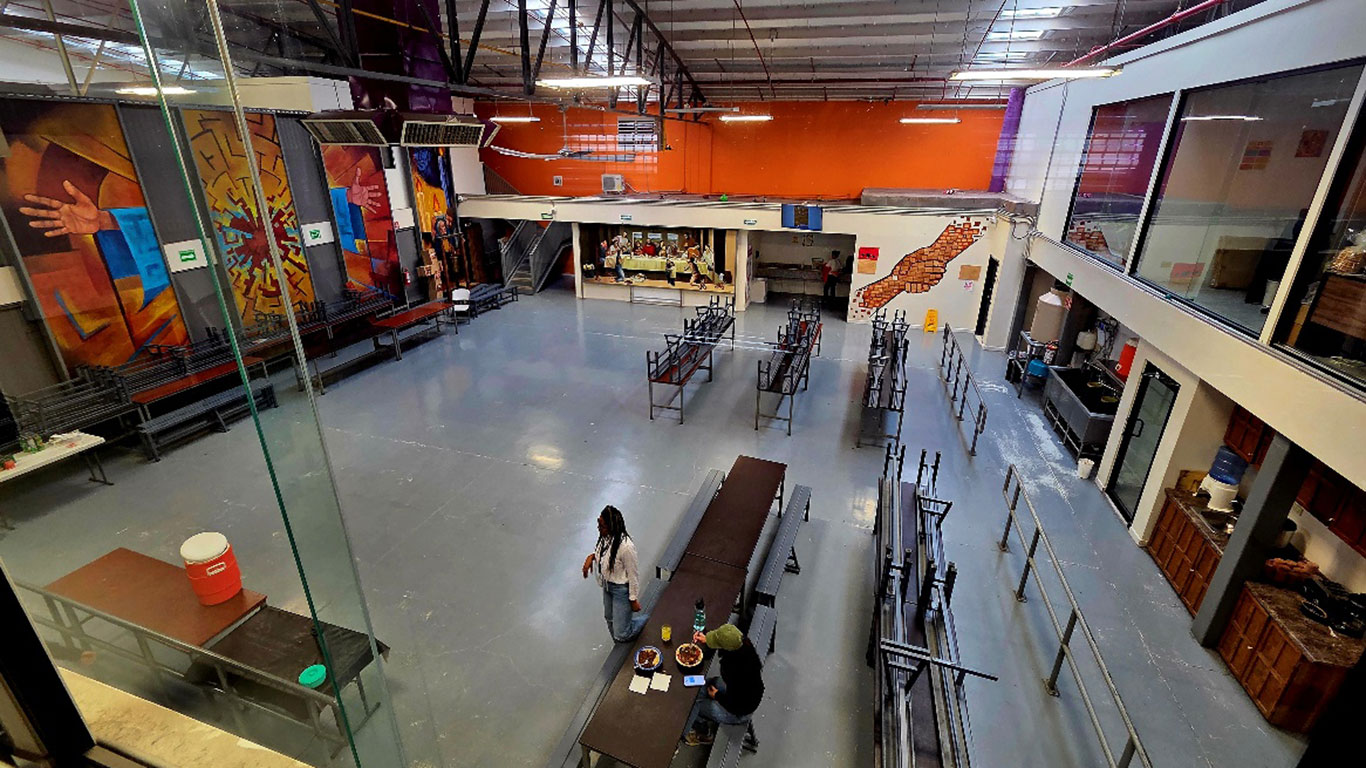
At the Kino shelter, we shared meals and conversations with people who had been deported.
One man crossed into the U.S. in the mid-1990s, young and barely thinking about the consequences. He served time in the Mexican Army before that. He lived in the U.S. for decades, washing cars in Las Vegas, building a life quietly. A traffic stop ended it. He was turned over to ICE and deported to a city where he knew no one.
He eventually made his way to Nogales because he had distant connections there. He now makes just enough to cover rent and a few small comforts. He eats at the shelter. His girlfriend and two children are still in the U.S.
He talked in a hushed voice about paying the cartel $10,000 to try again. When asked if it was safe, he said he didn’t know and didn’t seem to care. When your family and livelihood is on the other side, danger becomes relative.
Another young man had been brought to the U.S. when he was four or five years old. He grew up American in every way that mattered. He worked in construction, and didn’t know he wasn’t a citizen until much later.
A traffic stop led to deportation. He tried once to cross back and was caught, making any legal return nearly impossible. In Nogales, he stands out with his American accent, slightly out of place among people who grew up there.
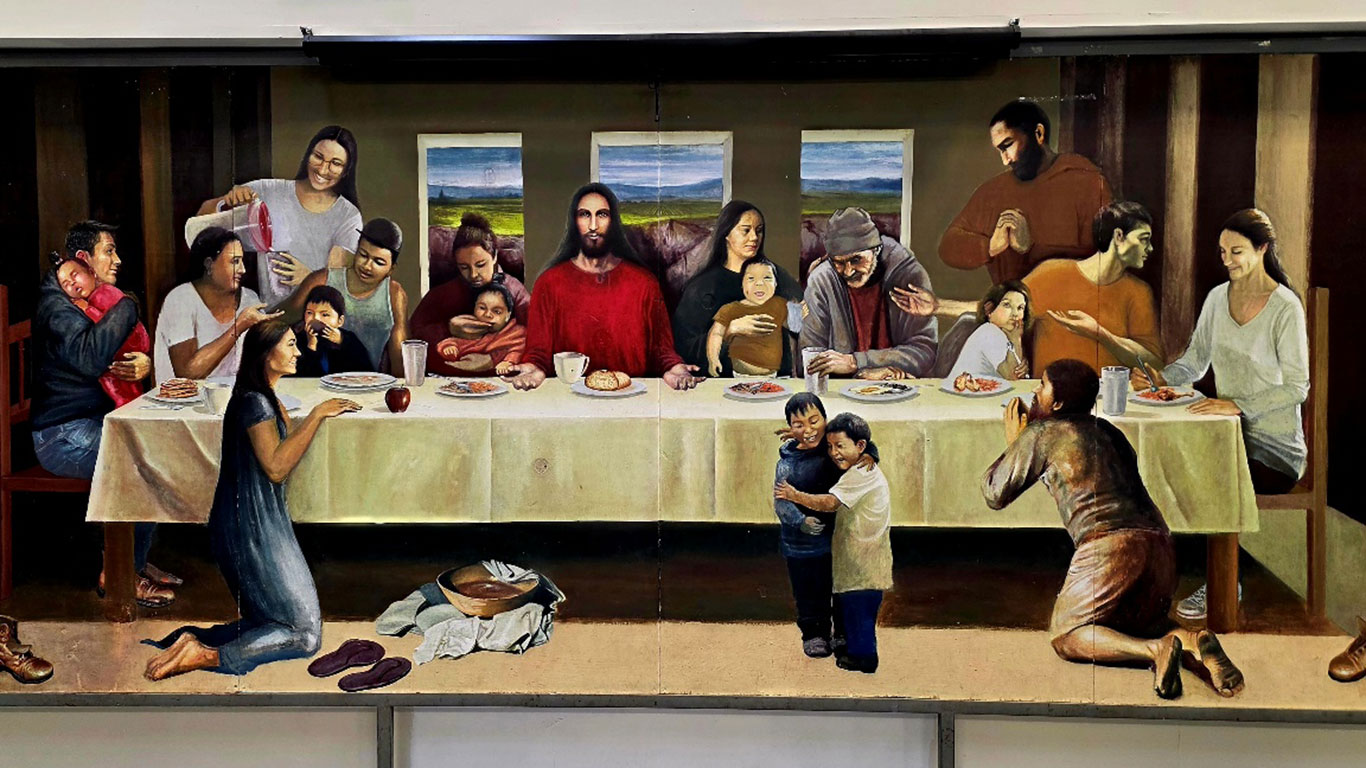 I also met a woman whose story was almost unbearable to hear. Brought to the U.S. as a child, isolated from school, abused repeatedly by her own family. Abandoned on a street corner by her mother when she became pregnant by her abuser at age 17. Exploited. Pulled into criminal activity as a way to survive. Her children were eventually taken into state custody last July. By the time she was deported for a minor offense, her life had already been shaped by trauma long before immigration enforcement ever touched it.
These stories don’t fit clean categories and they resist shortcuts.
What stayed with me most, though, were the children at the shelter.
They weren’t withdrawn or defeated. They were joyful. Curious. Laughing.
It made me wonder what we trade away in our pursuit of comfort and control, and what it costs to the people we exclude.
Inside the System With Border Patrol
On the final day, we spent time with Border Patrol.
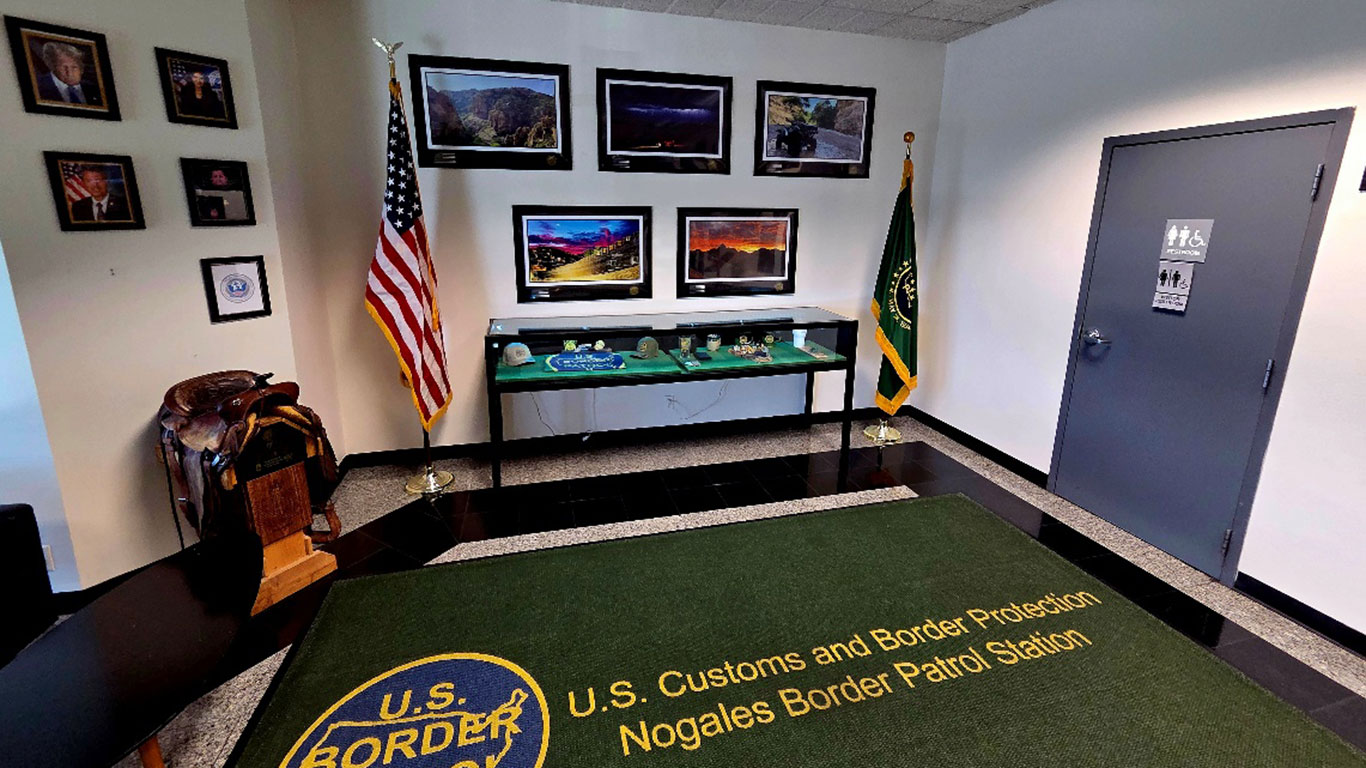
A senior agent walked us through their facility and spoke candidly about the realities of the job. The Nogales sector is hundreds of agents short. With retirements coming, staffing gaps are expected to grow.
They talked about being routinely outnumbered in the field, why agents can’t afford to hesitate, and how quickly situations can escalate. He spoke with gravity about the agents that have been lost in the line of duty, and we saw the memorials to them. We learned about the role Border Patrol plays in responding to natural disasters, coming to the aid of citizens in need with no fanfare or press coverage. They described the welcome presence of the U.S. Army along the border (not to engage, but to observe and report), a sign of how stretched resources are, contrary to what is reported.
The agent, a former Army Airborne paratrooper with nearly two decades in Border Patrol, spoke about the toll the work takes. Long shifts. Constant vigilance. The emotional weight of encountering death, desperation, and exploitation over and over again.
He explained that agents now have access to mental health resources: counselors familiar with trauma specific to border work, peer support, and programs meant to address burnout before it becomes something worse. He was clear. Those resources matter, because this job carries things home with you whether you want it to or not.
He also told us his parents immigrated from Mexico when he was a boy.
He spoke about wanting to do his job well, protect people, and still return home safely to his family each night.
What stayed with me was how often I heard the same concern from migrants, ranchers, and agents alike:
The system rewards the wrong things.
How Language Shapes Outcomes
There’s another layer to this that matters deeply.
I still hear people in top leadership positions claim that undocumented immigrants vote in U.S. elections and that they threaten democracy itself. There’s no evidence that’s true. Undocumented people do not vote in any meaningful or coordinated way. Many live in fear of being discovered.
But believing that claim has consequences.
When people are framed as a threat, dignity becomes optional.
Dehumanization doesn’t begin at the border. It begins upstream in language that isn’t honest and then flows into policy, enforcement, and daily life. When we dehumanize others, we also dehumanize ourselves.
The people I met aren’t stealing elections.
They’re navigating systems that rarely see them as people.
Holding Two Truths at the Same Time
Here’s what I’m taking home.
A secure border matters.
Humane treatment matters.
Ranchers, migrants, Border Patrol agents, and communities on both sides are all caught inside a reality shaped by income inequality between the USA and other nations, drug demand, labor demand, the flow of guns into Mexico, and systems that prioritize metrics over humane outcomes.
I don’t have all the answers, probably just more questions.
But after walking this land and listening carefully, I’m convinced of this:
If we keep measuring this crisis only in numbers, we’ll keep missing what it’s actually doing to people.
And if we can’t see people clearly — with their names, stories, and families — we shouldn’t be surprised when cruelty starts to feel normal.